Uluslu Plastik
Manufacturing · Injection moulding · 2026- Role
- Product design, front-end engineering, storefront, launch
- Stack
- Next.js · TypeScript · Tailwind CSS
- Live at
- ulusluplastik.com ↗
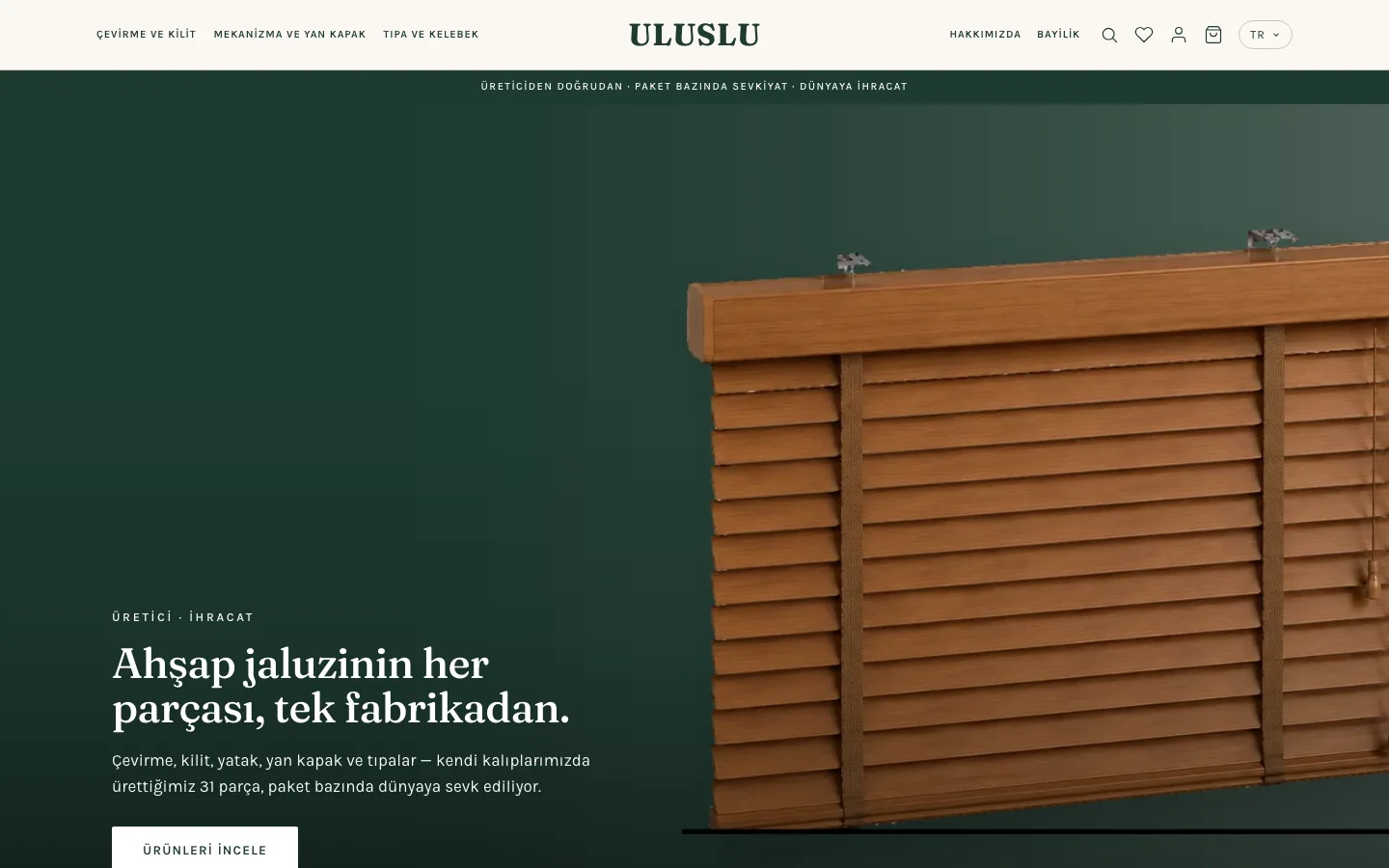
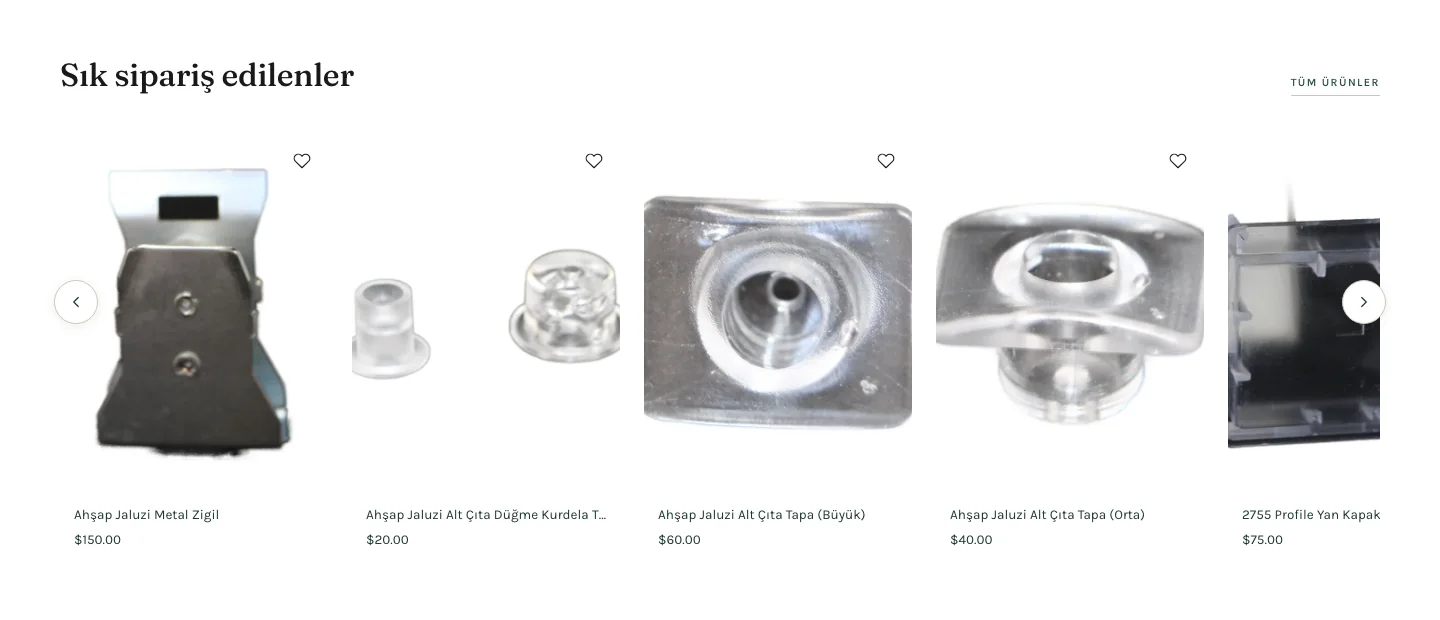
Uluslu Plastik produces the plastic components of wooden venetian blinds — tilters, locks, cradles, side caps, end plugs and butterflies — in its own injection moulds, and ships them by the package to fabricators worldwide. The catalogue runs to 31 parts across 3 groups, and the buyer is rarely shopping for a part number: they have a window, a slat width, and a blind to assemble.
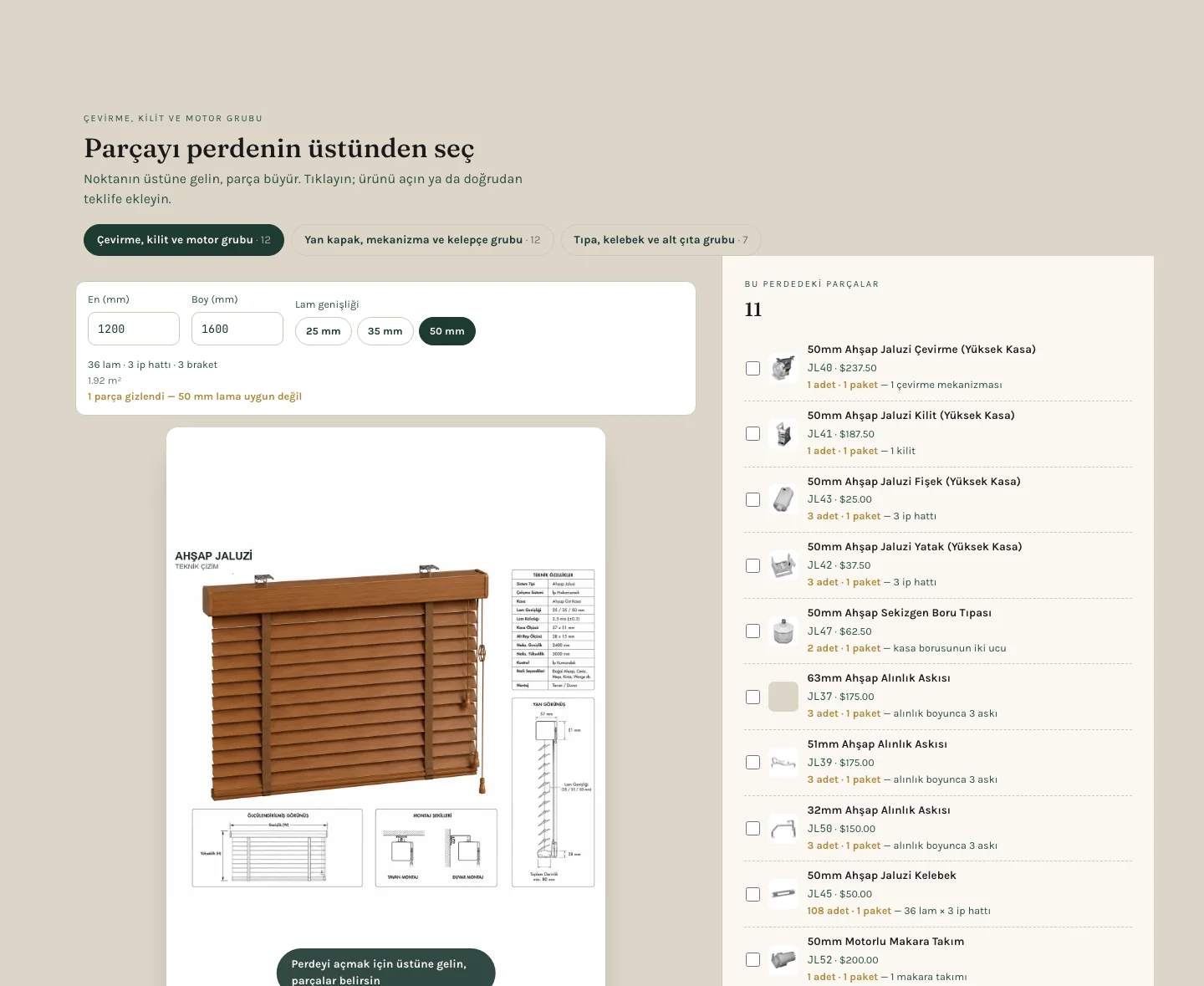
So the site does the assembly arithmetic rather than asking for it. Width, height and slat width resolve to the slat count, cord lines and brackets a blind needs, and from there to the exact parts — each with its code, its package quantity and its price, with anything incompatible removed and the reason stated. From there it is a storefront: open a part, save it, or send the whole specification through as a quote.
- parts in the catalogue
- 31
- product groups
- 3
- slat widths, mm
- 25 · 35 · 50
A catalogue organised by assembly, not by SKU
31 parts sit in 3 groups that follow how a blind goes together — tilt, lock and motor (12), side cap, mechanism and clamp (12), plug, butterfly and bottom rail (7). A fabricator finds a component by pointing at where it belongs rather than by knowing its code.
A configurator that derives the bill of materials
Enter width, height and slat width — 25, 35 or 50 mm — and the assembly resolves itself: slat count, cord lines, brackets and square metres, then the parts that follow from them. Quantities carry their arithmetic, so 108 pieces reads as 36 slats × 3 cord lines rather than as a number to be trusted.
Compatibility enforced, and explained
A part that does not fit the chosen slat width leaves the list rather than staying there to be ordered by mistake — and the removal is stated, with the count and the reason, instead of happening silently.
A storefront priced by the package
Every part carries its code and the price for the quantity the plant actually ships. Parts can be opened as products, saved, or added to a quote from inside the configurator, so the specification and the order are one object rather than two.
Manufacturer-direct positioning
The 4 capabilities the business sells on — mould design, series production, material range and quality control — carry the site instead of hiding in an about page. The commercial promise sits in the first screen: direct from the manufacturer, by the package, exported worldwide.
One catalogue behind every surface
Browse pages, group listings, configurator and storefront all read the same catalogue, so a price or a package quantity is corrected in one place. The site is Next.js, prerendered, and served under locale-prefixed routes.